Over/Under 2.5 Goals Betting Strategy
Listen to the highlights
Audio summary · 0:00
Football Tips
Match Date: 12 Oct 2026| Match | Tip |
|---|---|
| ALIANZA SAN SALVADOR vs INTER F.A | 1 |
| CUSCO FC vs ALIANZA LIMA | 2 |
| BERAZATEGUI vs DEFENSORES DE CAMBACERES | 1X |
| BOLIVAR vs BLOOMING | 1 |
Why Over/Under 2.5 Goals Is the Most Traded Market in Kenya
If you walk into any betting shop in Nairobi, Mombasa, or Kisumu right now, the market most people are checking on their slips is over/under 2.5 goals. It is the single most popular goals market in football betting across Africa, and Kenya leads the continent in total betting volume. According to a 2025 SiGMA World report, 52% of Kenyan football fans placed a bet ahead of major tournaments, and the over/under market accounts for a significant chunk of that action. Karibu (welcome) to the market that every serious punter eventually learns to master.
The appeal is simple: you do not need to pick a winner. You do not need to predict the exact scoreline. You only need to decide whether a match will produce three or more total goals, or two or fewer. That binary decision is what makes it powerful when combined with the right data. Haraka haraka haina baraka (hurry hurry has no blessings) -- taking the time to analyse before clicking "place bet" is what separates consistent winners from the crowd.
This guide breaks down a complete, data-driven over/under 2.5 goals strategy specifically built for Kenyan punters. We cover the leagues where this market hits most often, the six-step checklist that professional tipsters use before every selection, and the bankroll management rules that keep you in the game long-term. Pesa ni nguvu (money is power), but only when you manage it with discipline.
How the Over/Under 2.5 Market Actually Works
Before diving into strategy, it is worth making sure the basics are crystal clear. The over/under 2.5 goals market asks one question: will the total number of goals scored by both teams combined be three or more (over) or two or fewer (under)? The .5 exists because there is no such thing as half a goal in football, which means every bet has a definitive outcome with no possibility of a push or void. A match that ends 2-1, 3-0, 4-2, or 2-2 all settle as "over." A 0-0, 1-0, 1-1, or 2-0 settles as "under."
Understanding the Odds
Bookmakers price this market based on implied probability. If a match between two high-scoring teams is priced at 1.60 for over 2.5, the implied probability is roughly 62.5%. That means the bookmaker believes there is a 62.5% chance of three or more goals. Your job as a punter is to find situations where the actual probability is higher than what the odds suggest. That gap between real probability and bookmaker price is what professional bettors call "value," and it is the single most important concept in profitable betting.
For context, the average over 2.5 hit rate across Europe's top five leagues sits around 50-54%, depending on the season. In the Kenyan Premier League, the rate has fluctuated between 45-48% over the past two seasons, according to data from multiple statistical providers. These are not guesswork numbers -- they come from thousands of matches worth of historical data.
League-by-League Over 2.5 Goals Data
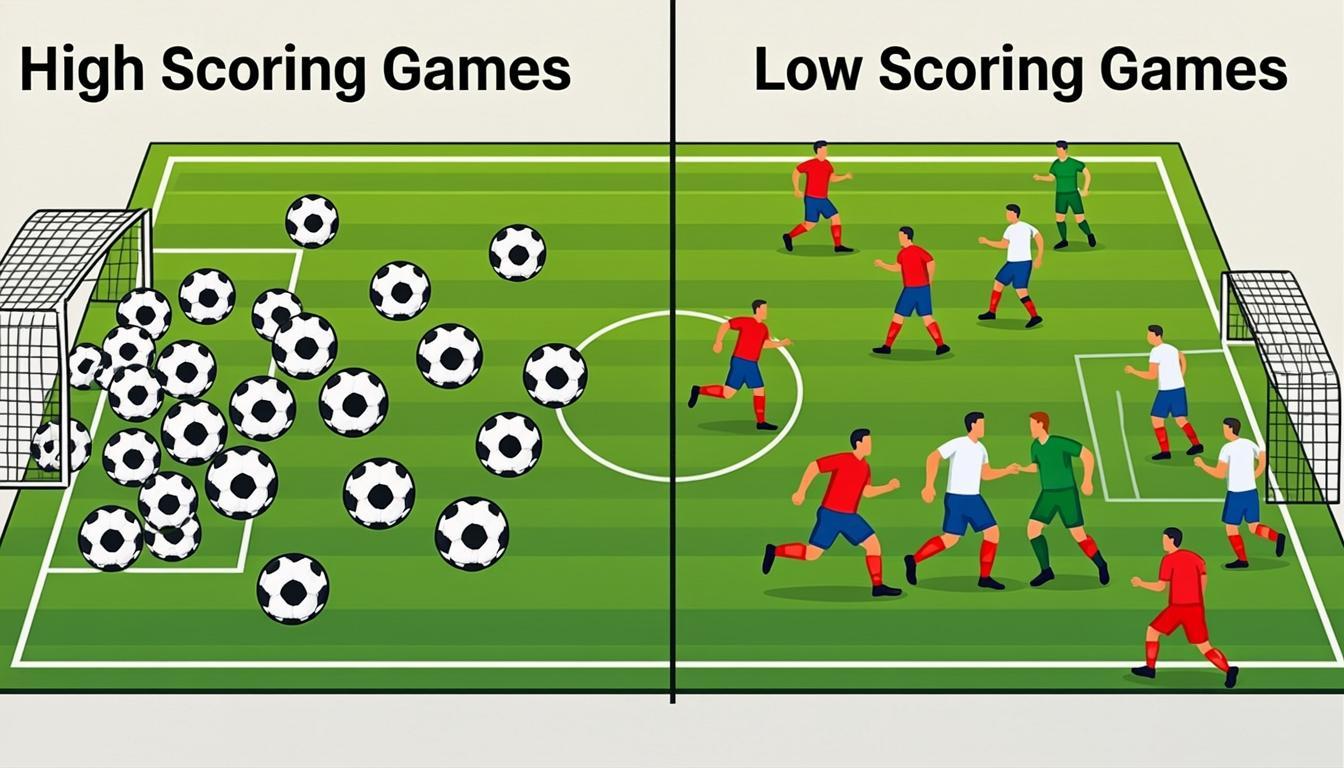
Not all leagues are created equal when it comes to goals. Choosing the right league to bet on is half the battle. Here is a breakdown of the key leagues that Kenyan punters should be watching, ordered by their historical over 2.5 hit rates.
High-Scoring Leagues (Best for Over 2.5)
- Dutch Eredivisie -- Consistently the highest-scoring major league in Europe, averaging 3.2-3.4 goals per game. The over 2.5 hit rate regularly exceeds 58%, making it a prime hunting ground for over bets. Teams like Ajax, PSV, and Feyenoord play open, attacking football that produces goals in bunches.
- German Bundesliga -- Averages 3.0-3.2 goals per game with an over 2.5 rate of approximately 55-57%. Bayern Munich's dominance and the league's tactical emphasis on pressing and high lines create numerous high-scoring affairs.
- Swiss Super League -- Often overlooked but consistently delivers 2.9-3.1 goals per game with a 55%+ over rate. The gap between top and bottom teams is wide, which creates many mismatches that produce three or more goals.
- English Championship -- Despite being a second tier, this league averages 2.7-2.9 goals per game and has seen over 2.5 rates climb to 53-55% in recent seasons. The chaotic, end-to-end nature of Championship football makes it surprisingly fertile ground for this market.
Leagues for Under 2.5 Bets
- French Ligue 1 -- Historically one of the lowest-scoring top leagues, averaging 2.4-2.6 goals per game. The tactical culture prioritises defensive structure, and the under 2.5 rate often sits at 50-55%.
- Portuguese Primeira Liga -- Averages 2.4-2.6 goals per game with strong defensive organisation from mid-table teams, making under bets viable in matches not involving Benfica or Porto.
- Argentine Primera Division -- Known for tight, physical matches with an average of 2.2-2.4 goals per game, this is one of the best leagues globally for under 2.5 selections.
African Leagues Kenyan Punters Should Track
The Kenyan Premier League itself has become an increasingly reliable market for over/under analysis. In the 2025/26 season, teams like Murang'a SEAL (44% over 2.5 rate), AFC Leopards (41%), and Ulinzi Stars (41%) have provided consistent data points for over bets, as covered in our Kenya Premier League betting strategy guide. The South African Premier Soccer League and the Tanzanian Premier League also offer valuable data, with PSL averaging around 2.5-2.7 goals per game.
The 6-Step Over/Under 2.5 Checklist
Profitable punters do not rely on feelings or team loyalty. They follow a repeatable process before every selection. Here is the six-step checklist that you should run through before placing any over/under 2.5 goals bet.
Step 1: Check 10-Match Scoring and Conceding Averages
Look at each team's last 10 matches in all competitions. Calculate the average goals scored and conceded per game. If Team A averages 2.1 goals scored and Team B concedes 1.8 goals per game, the combined expected goals (xG) is 3.9 -- a strong indicator for over 2.5. Conversely, if both teams average below 1.2 goals scored, the under becomes the clear play. Focus on recent form, not season-long averages, because form fluctuates significantly over a campaign.
Step 2: Review Head-to-Head History
Some fixture pairings consistently produce goals regardless of current form. Derby matches, for example, often defy form and produce open, high-scoring games. Check the last 5-10 meetings between the two teams. If 7 out of their last 10 meetings went over 2.5, that is a meaningful data point that should factor into your decision. Head-to-head data is especially relevant in African cup competitions and domestic rivalries like Gor Mahia versus AFC Leopards.
Step 3: Verify Key Attacking and Defensive Absences
A single injury can shift the probabilities significantly. If a team's top scorer or primary playmaker is out, their expected goals drop. Check confirmed lineups and injury reports before placing your bet. A team missing its starting striker and creative midfielder is far less likely to contribute to a high-scoring game. Use resources like Transfermarkt and official team announcements to confirm availability.
Step 4: Analyse the Match Context
Context matters enormously. A team fighting relegation that needs a win will play more aggressively, increasing the chance of goals. A team that has already secured the title or a European spot may field a weakened side and play conservatively. Cup competitions where one team has a first-leg advantage may see the leading team defend deeply, pushing the probability toward under 2.5. Always ask: what does each team actually need from this match?
Step 5: Compare Odds Across Multiple Bookmakers
Different bookmakers price the same market differently. SportPesa, 1xBet, Betway, and other Kenyan-licensed operators often have slight variations in their over/under lines. A match priced at 1.70 on one platform might be available at 1.85 on another. Over the course of hundreds of bets, consistently taking the best available price adds up to a meaningful difference in your profit margin. This principle is known as "line shopping" and it is one of the easiest ways to improve your returns without changing your selection process at all.
Step 6: Apply the Value Test
This is the most important step. After completing steps 1-5, assign your own probability estimate. If you believe a match has a 65% chance of going over 2.5 and the best available odds are 1.75 (implied 57%), you have identified a value bet. If the odds imply a higher probability than your estimate, skip the bet. Discipline here is what separates long-term winners from recreational punters. Not every match offers value, and sitting out is a valid and necessary part of the strategy.
Bankroll Management for Over/Under Betting
Having a good selection process means nothing without proper money management. The most common mistake Kenyan punters make is staking too much on single bets or chasing losses after a bad run. Here is a framework that works.
The 3-5% Flat Stake Rule
Never wager more than 3-5% of your total betting bankroll on a single over/under bet. If your bankroll is KSh 10,000, your maximum stake per bet should be KSh 300-500. This ensures that even a losing streak of 10 bets (which happens to everyone) only costs you 30-50% of your bankroll, leaving you with enough capital to recover. The mathematics behind this are straightforward: smaller stakes mean lower variance, and lower variance means you stay in the game long enough for your edge to manifest.
The 1-3% Stake for Accumulators
Over/under bets are popular in accumulators (multibets), but adding more legs increases the risk of losing dramatically. A 5-leg accumulator at combined odds of 8.00 has a roughly 12.5% chance of winning even if every individual selection is a 67% probability. For accumulators, reduce your stake to 1-3% of your bankroll. The potential payout is higher, but the probability of winning drops with every added leg.
For more on building smart accumulators, check our SportPesa Mega Jackpot prediction strategy, which covers how to approach multi-match selections with a disciplined framework.
Track Every Bet
Keep a simple spreadsheet or notebook recording every over/under bet you place: the date, the teams, the selection (over or under), the odds, the stake, and the result. After 50-100 bets, review your data. Which leagues are you most profitable in? Are you better at over or under selections? This self-audit reveals patterns that intuition alone cannot detect. Punters who track their bets consistently outperform those who do not, because they learn from their own data rather than repeating the same mistakes.
Common Mistakes to Avoid
Even experienced punters fall into traps with this market. Here are the pitfalls that cost Kenyan punters the most money.
Betting on Your Favourite Team
Loyalty to Gor Mahia, AFC Leopards, or any other club has no place in betting analysis. Supporting a team means cheering for them, not wagering on their matches. The data does not care about your allegiance, and neither should your betting decisions. If the numbers say under 2.5 in a match involving your favourite team, take the under or skip the bet entirely.
Ignoring the Under Market
Many punters default to "over" because high-scoring games are more exciting. But in leagues like Ligue 1, the Primeira Liga, and many African domestic competitions, the under 2.5 market actually offers better value more often. A balanced approach that considers both sides of the market will produce better results than automatically backing over in every match.
Chasing Losses with Bigger Stakes
After a losing bet, the temptation to "win it back" with a larger stake is overwhelming. This is the fastest path to an empty wallet. Stick to your 3-5% stake regardless of recent results. Your betting edge (if you have one) plays out over hundreds of bets, not single transactions. Short-term variance is normal and expected. The punter who controls their emotions controls their bankroll.
Over-Leveraging Accumulators
A 10-leg accumulator with every selection at 1.40 odds produces combined odds of approximately 28.92. The probability of winning is roughly 3.5%, even if each individual leg is a 71% chance. That means you lose 96.5% of the time. Accumulators are fun and can produce life-changing payouts, but they should be treated as occasional entertainment, not as your primary betting strategy. Keep your core betting activity on singles and doubles where your edge can compound over time.
Where to Find Reliable Data for Over/Under Analysis
The quality of your selections is only as good as the data behind them. Here are the tools and sources that serious punters use for over/under 2.5 analysis.
- FlashScore and Sofascore -- Both provide real-time scores, team form, head-to-head records, and goal statistics for leagues worldwide. Their mobile apps are the most popular among Kenyan punters for pre-match research.
- Fbref and Understat -- These sites offer advanced metrics like expected goals (xG), shots on target per game, and pressing intensity. Fbref covers African leagues including the KPL, making it particularly useful for local analysis.
- PredictZ and Forebet -- Mathematical prediction sites that use algorithms to estimate goal probabilities. For a deeper look at how these tools work, read our complete guide to Forebet predictions.
- Transfermarkt -- Essential for checking injuries, suspensions, and squad depth before finalising your selections.
- OddsPortal -- Compares odds across dozens of bookmakers, helping you find the best price for every selection. Line shopping is a free way to boost your expected return.
Putting It All Together: A Sample Selection Process
Let us walk through a hypothetical example to show how the checklist works in practice. Suppose you are considering an Eredivisie match between PSV Eindhoven and FC Twente. PSV has scored 2.8 goals per game over their last 10 matches and conceded 0.9. Twente has scored 1.7 and conceded 1.4. The combined expected goals are 3.1 + 2.6 = 5.7, but more realistically, you would look at PSV's expected goals against Twente's conceding rate, which suggests around 3.2 expected goals for this match.
Head-to-head: 7 of the last 10 meetings produced 3+ goals. No key attacking injuries confirmed. PSV is pushing for the title and needs a win, while Twente is safe in mid-table with nothing to play for. The context favours goals. The best available odds for over 2.5 are 1.55 across major bookmakers. Your estimated probability is 68%, while the implied probability is 64.5%. That is a value bet of roughly 3.5%. You stake 4% of your bankroll and record the bet in your tracker.
This is the process. It takes 10-15 minutes per match, but it dramatically improves your decision quality compared to the punter who picks over 2.5 on every Eredivisie game because "Eredivisie has lots of goals." Not every Eredivisie game goes over. The data tells you which ones are most likely to.
Live Betting the Over/Under 2.5 Market
The in-play (live) over/under market offers additional opportunities that pre-match betting does not. If a match is 0-0 at half-time between two attacking teams, the odds for over 2.5 will often drift to 2.00 or higher. If you have done your pre-match research and believe the teams will push for goals in the second half, this inflated price represents genuine value. The key with live betting is patience: wait for the price to reach your threshold before entering. Do not bet simply because the clock is ticking.
Conversely, if a match is 2-0 after 30 minutes and the tempo has dropped, the under 2.5 for "second half only" markets might offer value if the leading team is content to defend. Live betting rewards punters who watch the match and read the tactical flow, not those who react to every shot on goal.
Frequently Asked Questions
Over/under 2.5 goals predictions?
Predictions depend on the specific match: check both teams’ scoring/defensive stats, expected goals (xG), recent form, and motivation. No prediction is guaranteed, so compare bookmaker odds and line movements before betting.
Over under 2.5 goals meaning?
Over 2.5 means the total goals in the match must be 3 or more to win. Under 2.5 means the total must be 2 or fewer. The 0.5 removes the possibility of a push/refund.
Over under 2.5 goals dropping odds for today?
I don’t have live odds. Use odds comparison sites like Oddsportal, Betexplorer, or Flashscore to see dropping odds in real time. Dropping odds often indicate market confidence, but not a guaranteed outcome.
How to bet on over under 2.5 goals?
Pick a match, analyze both teams’ attack/defense, average goals, and xG, then choose over or under 2.5. Compare odds across bookmakers and use a staking plan. Avoid betting on every match; focus on value.
Is over 1.5 goals a good bet?
Over 1.5 is safer than over 2.5 because it only needs 2 total goals, but odds are lower. It can be good when both teams score regularly or when one weak defense faces a strong attack. Still, no bet is guaranteed.
Prediction under over 2.5 goals?
You need a specific match for a real prediction. General approach: if both teams score often and defenses are poor, lean Over; if one or both are low-scoring and defensive, lean Under. Check lineups and motivation before deciding.
Best football prediction sites for over and under 2.5 goals?
Popular sites include Forebet, PredictZ, Oddsportal, and Windrawwin. They provide statistical predictions, but no site is consistently accurate. Use them as a reference, not a guarantee.
100 correct score over/under 2.5goals?
There is no 100% correct score or over/under method. Correct score and over/under are different markets; combining them can increase odds but also risk. Use statistical models and bankroll management instead of chasing certainty.
Over under 2.75 goals?
This is an Asian total line: your stake is split between 2.5 and 3.0. If there are 3 goals, half wins and half is refunded; if 4+ goals, both halves win; if 2 or fewer, both halves lose. It reduces risk compared to a straight 3.0 line.
Sources:
https://www.oddsportal.com/
https://www.betexplorer.com/
https://www.forebet.com/
https://www.predictz.com/
Football predictions, including those referenced in this guide, are for informational purposes only and do not guarantee results. Betting involves financial risk. Only wager what you can afford to lose, and if betting stops being fun or starts feeling out of control, reach out for help at BeGambleAware.org. You must be 18 or older to bet.
Sources & References
Predictions are for informational and entertainment purposes only, not betting advice. See our editorial policy for how content is sourced, reviewed, and corrected. 18+ · Play responsibly.
Related guides
- Weekend Accumulator Tips: Pre-Season Friendly Betting Guide
- Asian Handicap Betting Explained: Complete Guide for African Bettors 2026
- 2026 Premier League Pre-Season Friendlies: How to Bet on Friendlies for Kenyan Punters
- Derby vs Freiburg Friendly: Betting Preview, Team News & Predictions for Kenyan Punters
- Pre-Season Friendlies July 2026 - Win Big with These Strategies